Policy Brief: Knowledge-Based Community Training to Build Resilience and Combat Disaster Governance Ineffectiveness in Himalayan States of India


Abstract
Despite being the world’s fourth-largest economy by Gross Domestic Product (GDP), India’s development story remains deeply uneven. Despite being the world’s fourth-largest economy by Gross Domestic Product, the ground reality for most Indian citizens, tells a different story. With a low Gross Domestic Product per capita, extreme inequality, and unevenly distributed growth, millions of Indians continue to struggle with basic nutrition, housing, education, healthcare, and access to proper infrastructure. While urban areas experience these challenges, the mountain states of the Indian Himalayas are particularly vulnerable, facing frequent natural disasters, underdevelopment, and reliance on agriculture, tourism, and small-scale farming for livelihoods. Rapid, unplanned urbanisation and haphazard infrastructure development, including hydropower projects and highways, further degrade biodiversity, ecosystems, and cause serious disruption to the day-to-day life of local communities, leaving them exposed to both natural and anthropogenic hazards. The current governance model lacks the necessary strategies to protect local populations due to lack of efficient development schemes that align with sustainable mountain and disaster governance. Therefore, this policy brief proposes a citizen-science-based community-training model that links Indian universities, NGOs, and international partners to equip mountain residents with the knowledge and tools needed to monitor environmental risks, respond effectively to hazards, and build resilience.
Introduction
Often celebrated as the world’s fourth-largest economy, ranking alongside the United States, Germany, and China, India`s GDP per capita remains among the lowest globally at $2,880 (The Wire, 2025). The World Inequality Report (2022) shows that wealth is concentrated in a tiny elite, while over 800 million Indians struggle to meet basic needs. When removing the richest 5% group, the GDP per capita drops to just $1,100, exposing the illusion of a robust and all-inclusive growth. While this inequality is visible across both rural and urban landscapes, it is amplified in the Himalayas states, where local economies depend on small-scale farming, agriculture and tourism. Frequent flash floods, landslides, glacier melt events, and unplanned renewable energy projects like hydropower projects have made these regions epicentres of environmental risk. This “development-at-any-cost” approach which prioritises short-term economic growth over ecological stability and human safety is at odds with the all-inclusive development India claims to achieve.
Disaster Vulnerability in Himachal Pradesh, Uttarakhand, and Ladakh
These fragile mountain ecosystems are under immense pressure due to unplanned development projects as well as climate change. Frequent disasters, coupled with weak or absent disaster governance framework and a lack of effective early-warning systems, leave residents in a constant state of precarity. The construction of highways, tunnels, and large-scale hydropower projects without adequate environmental or social assessments accelerates land degradation and displaces already vulnerable populations. Despite the frequency of such crises, local communities remain excluded from disaster management planning and often serve as the first and only responders when emergencies strike. There is an urgent need to transition from a state-dependent model of crisis response to a community-empowered framework that builds knowledge, preparedness, and local capacity. Recent assessments reveal alarming vulnerability across India’s mountain states:
- Himachal Pradesh continues to face recurring floods, glacier lake outburst risks, and infrastructure strain. In Himachal Pradesh, a recent report found that climate disasters over the past four years have caused economic losses of about ₹46,000 crore and 1,700 fatalities, noting that nearly two-thirds of the state’s traditional springs have dried up, and glacier retreat and new GLOFs are rising threats (DEST, GIZ, 2023).
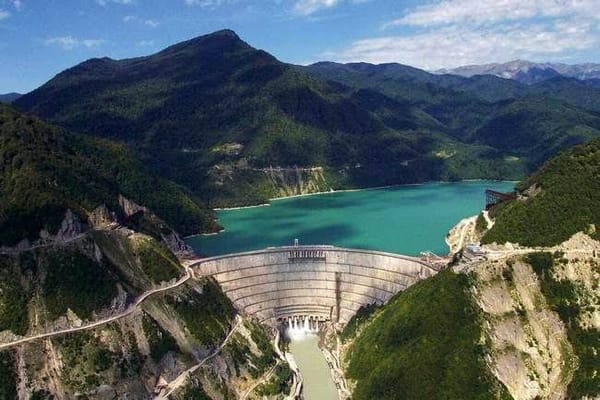
- Uttarakhand continues to experience destructive hydropower-induced landslides, flash floods, and road collapses, with the most recent tragedy being the Dharaali flash flood of August 2025 in Uttarkashi district, where more than 100 people went missing and at least one was confirmed dead after a massive surge of water and debris swept through the valley (BBC, 2025).
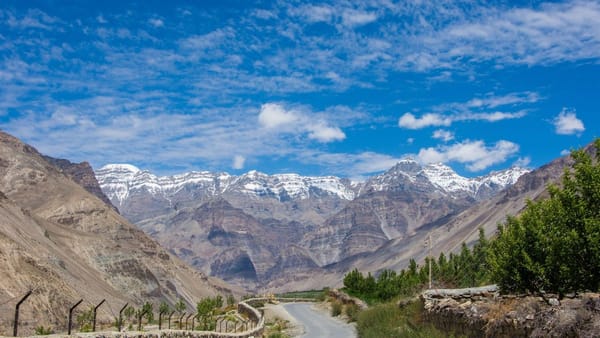
- In Ladakh and surrounding regions, the Central Water Commission flagged over 170 glacial lakes showing signs of expansion, raising fears of glacial lake outburst floods (NDMA, 2024).
The Problem and Governance Gap
The fragile mountain ecosystems of Uttarakhand, Himachal and Ladakh are under immense strain. Frequent disasters, coupled with weak disaster governance, risk reduction policies and the absence of effective early-warning systems, keep local residents in a perpetual state of disaster vulnerability. The unregulated construction of highways, tunnels, and large-scale hydropower projects that are often undertaken without proper environmental or social assessments and risk assessments, continue to cause land degradation, biodiversity loss and displacement of already marginalised populations. Interviews with prominent non-profit organisations across the three Himalayan states highlight the severity of the situation, revealing how current governance models exclude human development priorities while placing excessive importance on GDP metrics. Fragmented, GDP-based growth and the intense pursuit of “development at any cost” to assert military and geopolitical dominance continue to influence India’s development framework. NGOs working in the region explicitly advocate for a Human Development Index (HDI) driven governance model in place of the existing GDP-centric approach.
Disaster governance, management, and disaster risk reduction (DRR) strategies remain largely confined to policy documents, or as theoretical frameworks, or are missing entirely from active government agendas, particularly in the case of Uttarakhand, which lacks a robust disaster management framework. Consequently, affected populations are often left to fend for themselves or depend on slow-moving state agendas for rescue, rehabilitation, and compensation, processes that can take months, if not years. Top-down decision-making and the consistent exclusion of local knowledge leave communities without agency or voice in shaping their own safety. Despite the recurring nature of such crises, local populations remain absent from disaster management planning and repeatedly bear the aftershocks of disasters when emergencies occur. Thus, there is an urgent need to shift from a state-dependent model of crisis response to a community-empowered framework that builds knowledge, preparedness, and local capacity from the ground up.
Proposed Solution: Citizen Science and Community Participation
This policy brief proposes an education-led citizen science initiative as follows:
Citizen Science: Participatory Community Methods in the Himalayan States of India
Citizen science, defined as the participation of individuals outside formal scientific institutions in the collection and analysis of data, has become a recognised discipline and a significant movement within modern research practice (Hicks et al., 2019). In the context of disaster risk reduction (DRR), it holds substantial potential by enhancing early warning systems and contributing to the assessment, monitoring, and management of disaster impacts (Hicks et al., 2019). In South Asia, the benefits of volunteer participatory approach are already evident. In Nepal’s Rasuwa District, Parajuli et al. (2022) demonstrated how local communities trained in open-data mapping and environmental observation effectively bridged information gaps and strengthened early-warning systems in high-risk Himalayan zones. This example of community-driven data generation provides a replicable framework for India’s mountain states.
Accordingly, this policy brief proposes adapting similar methodologies within the Indian Himalayan context to foster a bottom-up, citizen-led initiative that equips residents with the knowledge, tools, and confidence to act as both knowledge bearers and first responders in their regions. Through community-led development, Indian universities and research institutions can collaborate with local NGOs and international partners to:
· Establishment of training and teach-in seminars and workshops in the towns and villages focusing on environmental literacy, biodiversity conservation, and disaster preparedness across Uttarakhand, Himachal Pradesh, and Ladakh. Particular emphasis should be placed on remote and high-altitude areas, where communities are most exposed to the impacts of natural and anthropogenic hazards.
· Adoption of innovative citizen science methodologies, such as volunteer-based open mapping platforms, to enable residents to systematically monitor environmental risks including systematic changes in soil, river flow variations, groundwater levels, deforestation, and slope instability and contribute this data to monitoring systems like OpenStreetMap (Parajuli et al., 2022).
· Promote participatory and narrative-based citizen science approaches (Hicks et al., 2019) that are conceived, planned, and driven from the grassroots, rather than imposed through top-down governance frameworks. Campaigns and initiatives should be coordinated by local NGOs, civil society organisations, and researchers experienced in community engagement and citizen science collaborations.
· Building collaborations with Scandinavian research networks or working with existing Scandinavian research outputs, particularly those that have advanced disaster-specific resilience methodologies such as CliCNord (Kongsager, 2023). Adoption from techniques utilised in the CliCNord project can improve knowledge exchange, lead to adoption of best practices for disaster risk reduction in remote communities, and the adaptation of low-cost technologies that are also suitable for Himalayan landscapes.
Why It Matters for India’s Himalayan States
In the Indian Himalayas where steep topography, rugged terrain, high altitude remoteness and limited infrastructure often delay state-led interventions, citizen science presents a low-cost yet high-impact solution for real-time hazard monitoring. With simple tools such as smartphones, or simple observation logs, local communities can detect early warning signs of slope instability, changing river or small stream flows, or changes in existing glacial lakes, and communicate this information to district authorities. Empowering residents in such a way not only enhances the speed of disaster response but also builds community resilience, accountability, responsibility, ownership towards their environments as well as trust in environmental governance systems that directly affect their survival.
Actionable Recommendations
- Conduct regional training workshops and community classes in collaboration with non-profit and civil society organisations, academic and research institutions, and local political actors. These initiatives should equip residents with knowledge of environmental literacy, disaster risk awareness, and risk reduction strategies that meet the needs of Himalayan communities.
- Provide practical, hands-on training on essential safety protocols, including evacuation drills, search and rescue operations, first aid, and post-disaster rehabilitation. Embedding such practices within communities helps transform local populations from passive victims into knowledge bearers and first responders capable of protecting their own environments and extended neighbours.
- Develop community-based early-warning systems, ranging from simple alert mechanisms such as bells, sirens, or alarms to more technology-driven systems using smartphones and digital messaging platforms (e.g., WhatsApp, SMS, Telegram). These systems can allow residents themselves to issue real-time alerts of impending hazards and mobilise rapid local responses within their societies.
- Integrate local and indigenous knowledge systems into disaster forecasting and preparedness frameworks. Traditional local knowledge such as changes in wind patterns, changes in animal or bird behaviour, river flow patterns, can serve as early indicators of storms, cloudbursts, or landslides and complement modern monitoring tools.
- Integration of citizen science participatory methodologies within local and state governance structures as well as adoption of citizen science methods by non-profit and civil society organisations.
Limitations
· Data quality and reliability may be affected by unstable internet connectivity, limited access to digital tools, or insufficient technical training in remote mountain regions. Rigorous capacity-building and in-depth training are highly essential to ensure accuracy and scientific validity of the data collected.
· Sustained community participation may be challenging without adequate financial incentives or recognition for local contributors particularly in villages and towns that have low income and low productivity. Without compensation or tangible benefits, participation in long-term citizen science projects may fluctuate, reducing data accumulation and continuity of such projects.
· Effective implementation requires multi-stakeholder collaboration involving academics, researchers, civil society organisations, activists, and local political representatives. Achieving such coordination can be difficult without a dedicated mobilisation platform that is able to bridge institutional boundaries and promote regular knowledge exchange.
· Limited open access to research outputs remains a major constraint. Academic and research organisations, both within India and internationally, must commit to making their findings freely available to NGOs and community actors. Lack of dissemination of research findings presents structural issues at the ground level since civil society and non-profit actors seldom receive new research and information that could be used to impart information to the societies they work with. Therefore, open data access would enable these stakeholders to adapt scientific insights into practical training tools and locally relevant educational resources for Himalayan communities.
Conclusion/Discussion
The existing model of economic growth and development in India’s mountain states is fundamentally flawed and environmentally unsustainable. The absence of actionable and structured disaster risk reduction strategies, coupled with weak disaster management initiatives and a highly centralised, top-down governance approach, has resulted in recurring devastation during the monsoon months each year, leaving the mountain communities of Uttarakhand, Himachal Pradesh, and Ladakh highly vulnerable to floods, landslides, and infrastructure collapse. Through the adoption of participatory, citizen-science-based methods that train and empower local residents to act as both knowledge bearers and first responders within their own environments, India can shift from its current fragmented model of disaster governance to a preventive, participatory framework, one which is capable of saving lives, strengthening community resilience, and improving living conditions across these fragile mountain ecosystems.
Data availability
This policy brief draws on publicly available secondary data and verified institutional reports from the World Bank, The Wire, World Inequality Report, NDMA, Parajuli et al. (2022), Hicks et al. (2019), Economic Times Travel, DAL, FSI, WII,CWC, and BBC News, alongside primary qualitative insights obtained through semi-structured interviews with representatives of NGOs and community-based organisations in Uttarakhand and Himachal Pradesh. No proprietary or confidential data were used. All cited materials are accessible through their respective institutional or open-access repositories, and interview information has been anonymised in accordance with ethical research standards.
Competing Interest
The author declares no competing interests. This policy brief has been developed solely for academic and policy research purposes as part of ongoing doctoral research project titled “From Glaciers to Gridlines: Hydropower Development, Land Subsidence, Deforestation, Biodiversity Loss and Social Displacement in India`s Himalayan Valleys” at SOAS, University of London.
Grant information
No specific grant from any funding agency in the public, commercial, or not-for-profit sectors was received for this work.
Acknowledgements
The author expresses gratitude to nonprofit organisations in Himachal Pradesh, Uttarakhand, and Ladakh whose observations on hydropower development, disaster governance, management, and governance challenges have informed this policy brief.
References
The Wire (2025). India’s GDP Paradox: High Growth, Low Equity.
World Inequality Lab (2022). Income and Wealth Inequality in India, 1922–2023.
World Bank (2024). Country Overview: India.
Parajuli, B.P., Khadka, P., Baskota, P., Shakya, P., Liu, W., Pudasaini, U., B.C., R., Paul, J.D., Buytaert, W., & Vij, S. (2022). An Open Data and Citizen Science Approach to Building Resilience to Natural Hazards in a Data-Scarce Remote Mountainous Part of Nepal. Frontiers in Earth Science, 10, 820045. https://doi.org/10.3389/feart.2022.820045
Hicks, A., Barclay, J., Chilvers, J., Armijos, M. T., Oven, K., Simmons, P., Haklay, M., & Williams, R. (2019). Global mapping of citizen science projects for disaster risk reduction. Frontiers in Earth Science, 7, 226. https://doi.org/10.3389/feart.2019.00226
NDMA (2024). State Disaster Management Plan for Ladakh.
Nordforsk (2023). CliCNord Project: Climate Change Resilience in Small Communities of the Nordic Countries.
BBC News. (2025, August 6). More than 100 missing after flash floods in India. Retrieved from https://www.bbc.com/news/articles/cj3lxzpkn87o
Department of Environment, Science and Technology (DEST), Government of Himachal Pradesh, & Deutsche Gesellschaft für Internationale Zusammenarbeit (GIZ) GmbH. (2023). Climate change impacts and vulnerability assessment in Himachal Pradesh. Shimla: DEST & GIZ.
National Disaster Management Authority (NDMA). (2024). Union Territory of Ladakh: State Disaster Management Plan (2023–2024). New Delhi: Government of India, Ministry of Home Affairs.
Forest Survey of India (FSI). (2019). India State of Forest Report 2019: Volume II – State and Union Territory Reports (Himachal Pradesh, Uttarakhand, Jammu & Kashmir). Dehradun: Ministry of Environment, Forest and Climate Change, Government of India. Retrieved from https://fsi.nic.in/isfr19/vol2/isfr-2019-vol-ii-himachal-pradesh.pdf#
Economic Times Travel. (2024, September 8). Ladakh’s tourism industry deplores UT administration’s lack of focus on destination promotions. The Economic Times Travel. Retrieved from https://travel.economictimes.indiatimes.com/news/associations/ladakhs-tourism-industry-deplores-ut-administrations-lack-of-focus-on-destination-promotions/116591081
District Administration Leh. (2024). Tourism in Leh district. Government of India. Retrieved from https://leh.nic.in/tourism
Central Water Commission (CWC). (2023). National Register of Large Dams (NRLD) – 2023. New Delhi: Ministry of Jal Shakti, Government of India. Retrieved from https://cwc.gov.in/nrld
Wildlife Institute of India (WII). (2018). Annual Report 2017–2018. Dehradun: Ministry of Environment, Forest and Climate Change, Government of India. Retrieved from https://wii.gov.in/annual_report
IBEF. (2024). Himachal Pradesh: Economy and growth. India Brand Equity Foundation. Retrieved from https://www.ibef.org/states/himachal-pradesh
Chopra, R, Mongabay India. (2023, March 29). Hydropower projects vulnerable to warming climate and increased precipitation. Mongabay-India. Retrieved from https://india.mongabay.com/2023/03/climate-change-making-hydropower-projects-vulnerable/
Disclaimer & Copyright Notice
© 2025 Diva Sinha. All rights reserved.
This article, including all original ideas, analysis, and written content, is protected under international copyright law. No part of this publication may be reproduced, distributed, copied, or used in any form without prior written permission from the author.