Last Chance for the Orcas: Can Science Save the Southern Resident Killer Whale?

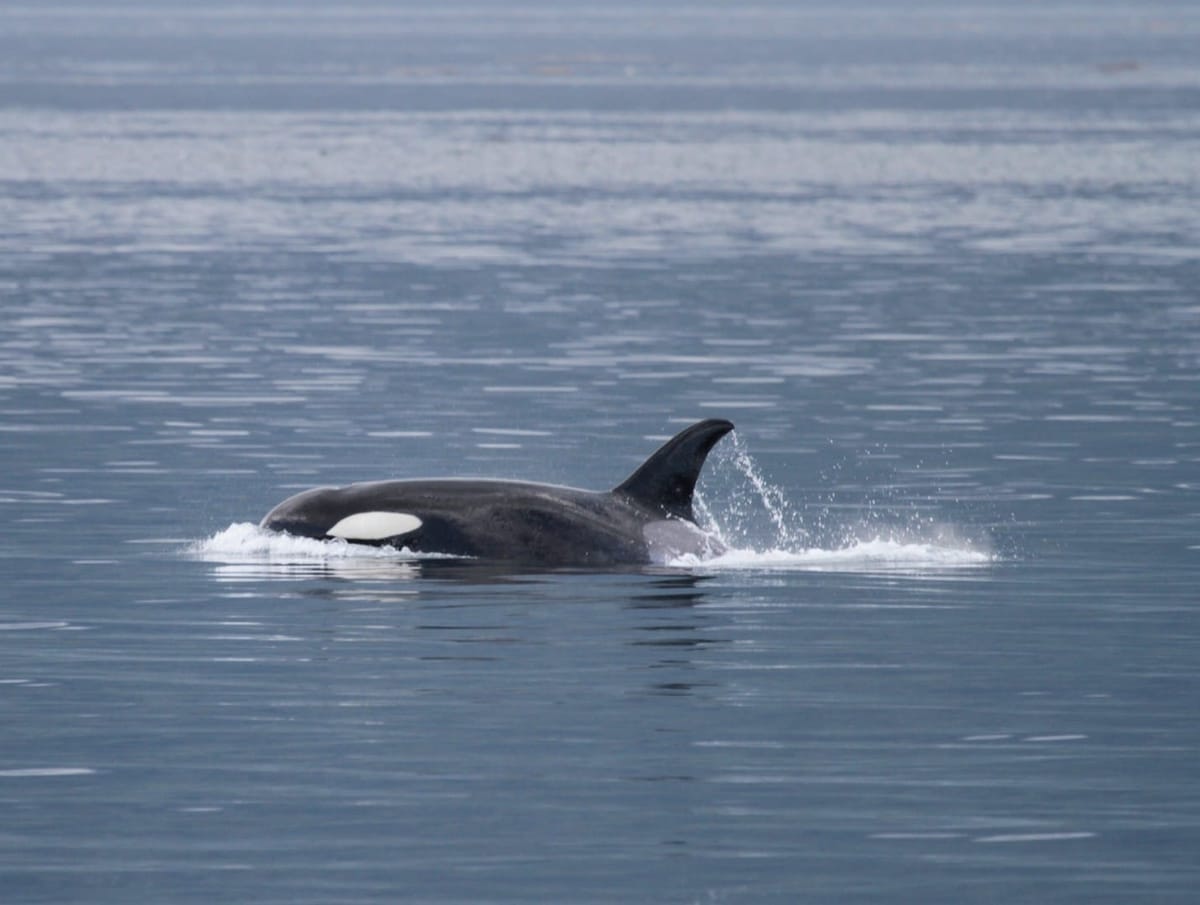
On cold misty mornings in the Pacific Northwest, the hauntingly beautiful calls of the Southern Resident Killer Whales ripple through the Salish Sea and Puget Sound.
On 7th July 2025, a groundbreaking report by an Independent Science Panel on Southern Resident Killer Whales Recovery marked the first unified effort by the scientific community to address the Southern Resident Killer Whale's alarming decline in the Pacific North-West. These orcas are officially classified as critically endangered, with the current number only 73 individuals, according to the last census. The report is a product of a workshop held in March 2025 in which a team of scientists and researchers from Simon Fraser University, the U.S.-based Center for Whale Research, and the David Suzuki Foundation convened in Vancouver, Canada to tackle the urgent conservation needs of the Southern Resident killer whale. The collaboration resulted in a comprehensive report released on 8th July 2025, that outlines 26 science-backed recommendations for policymakers in both the U.S. and Canada. Canada’s Department of Fisheries and Oceans echoed this caution in its March statement announcing Ottawa’s decision, noting that while the science informed the process, social, economic, and policy considerations, and the broader public interest were also factored in.
Dr. Lance Barrett-Lennard, Marine Mammal Scientist at the Raincoast Conservation Foundation and one of the lead authors of the new scientific report says“We specifically wanted to have a conversation that was science-focused, but we were mindful of keeping this as realistic as possible.”
He acknowledged that the recovery of Southern Resident killer whales is inherently slow due to their long lifespans and low reproductive rates.
“The existing measures since 2019 may have helped halt the population’s decline,” he noted, “but we’re not seeing an upturn yet.” “Southern Residents are long-lived animals that reproduce slowly, so recovery is expected to take decades” he explains. He stressed that the current population of just 73 individuals is not a sufficient number to withstand catastrophic events like disease outbreaks or oil spills, nor to maintain healthy genetic variation for future resilience.
So what does the report address?
The Southern Resident Killer Whales (SRKW) Recovery Actions Report recommends that to support the recovery of Southern Resident Killer Whales (SRKW), there should be a focus on reducing the harvest of key Chinook salmon prey especially high-fat, early-run stream-type stocks, improving freshwater habitats and flow conditions, limiting vessel noise and physical disturbance through strict quieting measures and spatial protections, including vessel exclusion zones, slowdowns, and mandatory AIS, aligning hatchery practices with Southern Resident Killer Whale dietary needs, and coordinating transboundary science-based management between the United States of America and Canada to ensure that the Southern Resident Killer Whales receive biologically sufficient prey, a noise free and clean oceanic space, and critical habitat access year-round. Among other priorities is the elimination of toxic chemicals that accumulate in the orcas’ food chain, particularly those that harm Chinook salmon, the Southern Resident Killer Whales’s primary prey.
“You cannot recover these whales without securing access to large, energy-rich Chinook salmon throughout the year,” said the US based SeaDoc Society’s Dr. Deborah Giles, an American scientist who has studied Southern Residents Killer Whales for two decades. “Stream-type Fraser Chinook in the spring are critical, and we have recommendations for both their habitat and their conservation” she explains.
The scientists also urge governments to accelerate the phase-out of legacy pollutants like PCBs and PBDEs, while also tightening regulations on emerging contaminants such as 6PPD-quinone (6PPD-q) a chemical found in tire dust and linked to salmon mortality and PFAS, the so-called “forever chemicals” used in non-stick cookware and waterproof textiles.
Dr Tanya Brown, assistant professor of Marine Ecotoxicology at Simon Fraser University and co-author of the report, highlighted a critical concern regarding toxic chemical regulations. “The iconic Southern Resident killer whales are highly contaminated with PCBs and related compounds. They are increasingly threatened by new and emerging contaminants,” said Dr. Tanya Brown. “In order to achieve recovery, we need to eliminate persistent contaminants and target new chemical concerns using regulations, enforcement and best practices.”. She explained that the deadline to eliminate existing PCBs, a harmful contaminant banned in the 1970s, was initially set for the end of 2025 but has now been extended to 2029. “We keep seeing more extensions for a contaminant that should have been fully phased out decades ago,” Brown said.
Noisy Seas
Previous research from the University of Washington revealed that the Salish Sea is too noisy for orcas to hunt effectively. Underwater noise pollution from vessels interferes with every behavioural phase of orca hunting behavior such as locating, pursuing, and capturing their fish prey. Therefore, to tackle such issues, the scientific panel strongly recommends implementing vessel noise reduction targets that are less harmful to the orcas. They propose expanding ship slowdowns to speeds of 11 knots, widening the geographic slowdown zones, and establishing mandatory noise output standards for large commercial vessels. The panel further calls for phasing out controversial shipping routes through the southern Gulf Islands, eliminating avoidable noise from bulk carriers, and improving port arrival management to further reduce acoustic disturbances.
Dr. Jennifer Tennessen, Senior Research Scientist at the University of Washington, who has used cutting-edge tools like digital acoustic recording tags to monitor southern resident orca behavior and evaluate the impacts of food scarcity and noise pollution says “Vessel noise forces whales to change their behavior, making them expend more energy while foraging at a time when food is already scarce.” She refers to Seattle’s Quiet Sound initiative, a voluntary program that asks boaters to slow down between October and January, when Southern Resident orcas are present. “There are two clear benefits,” she says. “First, slower vessels are less likely to collide with whales. And second, slower speeds reduce underwater noise levels, making the acoustic environment less disruptive for orcas.”
Damming of the Columbia River Basin- Bane for Salmon, Orcas and Indigenous Tribes
At the heart of this crisis is the damming of the Columbia River Basin, a vast watershed, about the size of Texas, which was once the greatest salmon-producing river system on Earth. Historically, it supported at least 16 distinct populations of salmon and steelhead. However, four of those populations are extinct, and seven are listed under the Endangered Species Act. Scientists estimate that while the Columbia River Basin once saw as many as 16 million wild salmon and steelhead return annually, that number has plummeted to just around 2 million today and alarmingly, two-thirds of salmon are now hatchery-raised. The root of this ecological collapse lies in the transformation of the Columbia river system through massive hydroelectric power plants development. Since the 1930s, a network of dams beginning with monumental projects like the Grand Coulee Dam and Bonneville Dam was built to generate electricity, support navigation, and create jobs during the Great Depression.
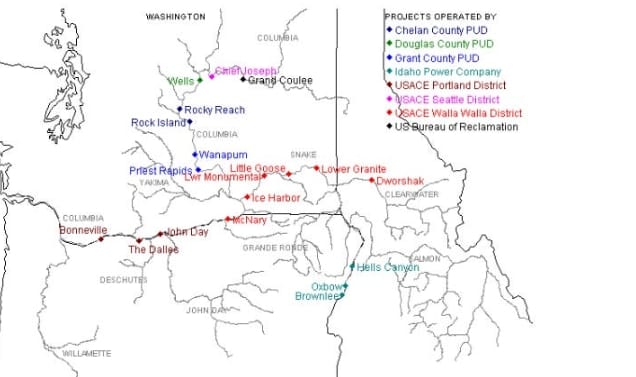
The Columbia River Basin is one of the most heavily dammed river basins in the United States with over 400 dams that have dramatically altered and reshaped its natural flow of the river and the ecosystem by flooding critical spawning habitats, raising water temperatures as well as creating dangerous passage routes for migratory fish like salmon, thus blocking salmon migration routes, and disrupting the delicate food chain that the endangered Southern Resident Killer Whales depend on for survival. While the hydroelectric power plants brought economic benefits, it came at a devastating environmental cost. For salmon, particularly those returning to inland tributaries like the Snake River which is the Columbia’s largest tributary, these dams have turned ancient migration routes into routes of death. Juvenile salmon often struggle to survive the journey downstream past multiple dams, turbines, and reservoirs, while returning adults face insurmountable barriers going upriver to spawn. This is where the Southern Resident Killer Whales come in. Unlike other orca populations, Southern Resident Killer Whales rely almost exclusively on Chinook salmon, a species of salmon which is now in steep decline. Without abundant, accessible salmon runs, the orcas face chronic food shortages, poor health, reproductive failure, and ultimately, extinction.
For generations, Native American tribes such as the Yakama Nation, the Spokane Tribe, the Confederated Tribes of the Colville, Umatilla Reservations, and the Nez Perce have warned of the devastating consequences of dam construction on salmon populations. As early as the late 1930s, they voiced concern that salmon runs could disappear entirely, with fish unable to access upstream spawning grounds. For these tribes, both salmon and orcas hold deep cultural and spiritual significance. They are not just species, but symbols of identity, culture, spirituality, and sacred responsibility. Despite decades of protest and advocacy, the construction and operation of hydroelectric dams have continued, often sidelining Indigenous voices. Today, hopes for salmon restoration and the development of renewable energy alternatives remain contested due to the shifting tides of U.S. federal policy. As long as administrations prioritise short-term economic growth over long-term ecological and cultural survival, the future remains grim, not just for the salmon and the orcas that rely on them, but also for the communities whose lives are also linked to these ancient beings.
Breach the Dams?
Fishery scientists and indigenous leaders alike argue that breaching the four Lower Snake River dams in Eastern Washington namely the Ice Harbor, Little Goose, Lower Monumental, and Lower Granite Dams represents the single most impactful step toward restoring salmon runs and giving Southern Resident Killer Whales a chance at survival. Yet that solution remains politically contentious, caught in the ongoing battle between energy, economics, and ecological justice.
Why is this report so crucial?
This report is critical because it offers a concrete, science-backed roadmap to help pull the Southern Resident Killer Whales back from the brink of extinction. It comes at a particularly precarious situation as the current President of the United States Donald Trump withdrew the federal government from the landmark Resilient Columbia Basin Agreement, a historic salmon recovery deal brokered by former President Joe Biden in late 2023 with the states of Oregon and Washington, four Native American tribes namely Nez Perce, Confederated Tribes of the Umatilla Indian Reservation,, Warm Springs, and Yakama Tribes, environmental non-profit organizations and conservationists. That agreement aimed to restore Pacific Northwest salmon populations and invest in clean energy alternatives for tribal communities, a move long sought by Native American nations who have argued that four hydroelectric dams on the Lower Snake River have decimated salmon runs, the primary food source for Southern Resident Killer Whales. The Biden administration had pledged $1 billion over the next decade to boost salmon recovery and develop new clean energy projects to eventually replace the hydropower output of the very dams at issue i.e. Ice Harbor, Little Goose, Lower Monumental, and Lower Granite Dams. A year later, in June 2025, US President Trump scrapped the agreement via presidential memorandum, calling it "radical environmentalism" and framing his decision as part of a broader effort to prioritise national energy infrastructure and lower costs of living over “speculative” climate concerns.
Now or Never for the Orcas
Out of the 73 Southern Resident Killer Whales inhabiting the Salish Sea and Puget Sound, 22 are reported to be in poor health. This paints a rather bleak image of the thriving resident orca population that most scientists, whale and dolphin researchers, indigenous tribes and environmentalists envision for the Pacific North-West. There is an urgent need for serious and drastic interventions in how we manage economic and maritime activities in our oceans and rivers. Protecting the ecosystems and biodiversity that sustain these iconic apex predators and their prey is essential to maintaining the delicate ecological balance. Without drastic action, the Southern Resident Killer Whales and other key species are at risk of extinction.