A Royal Bengal Tiger's Struggle: Blinded by Conflict and Ignorance"

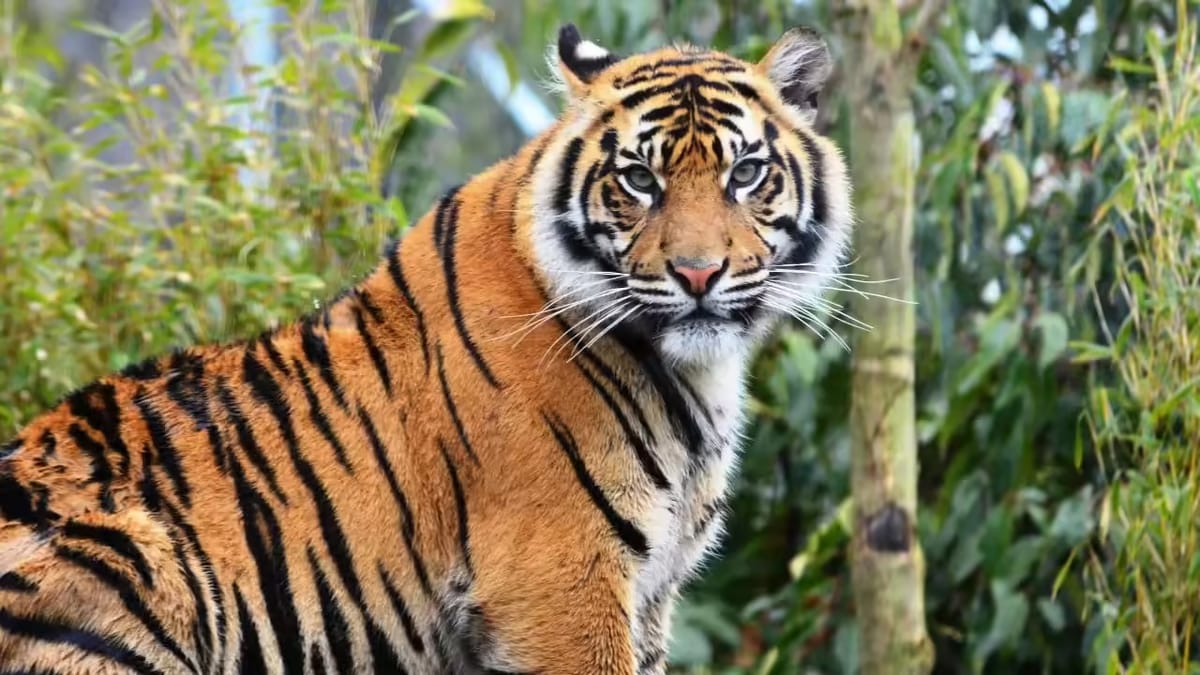
In November 2024, a heart-breaking incident unfolded in the Indian state of Assam, where a three-year-old Royal Bengal Tigress became the victim of a violent attack by local villagers. The tigress, who had been spotted in the area before, without incident and was deemed a gentle giant, had ventured into a nearby human settlement. Despite her calm and non-threatening demeanour, the sight of the tigress sent panic and fear through the villagers, leading them to respond with hostility instead of caution.
Rather than trying to manage the situation peacefully, the villagers began throwing stones at the tigress. Frightened and trying to protect herself, the tigress jumped into the pond. However, the villagers continued their onslaught, pelting her with stones even as she sought safety in the water. The attack was so severe, leaving the tigress with catastrophic injuries. The brutal assault caused irreversible damage to the tigress, leaving her permanently blind in both eyes. Furthermore, she also suffered serious bruising to her skull.
Wildlife Aid rescuers quickly responded to the incident, rushing to the scene to provide immediate care and rehabilitation to the injured animal. Despite their best efforts to treat the tigress and offer her comfort, the damage was too severe. The loss of her sight, coupled with the trauma, means she will never be able to return to the wild. Due to her blindness and the physical injuries she sustained during the attack, this majestic creature will now be forced to live the remainder of her life in captivity, a tragic fate for an animal that was once free to roam the forests of Assam.
Current Tiger Numbers
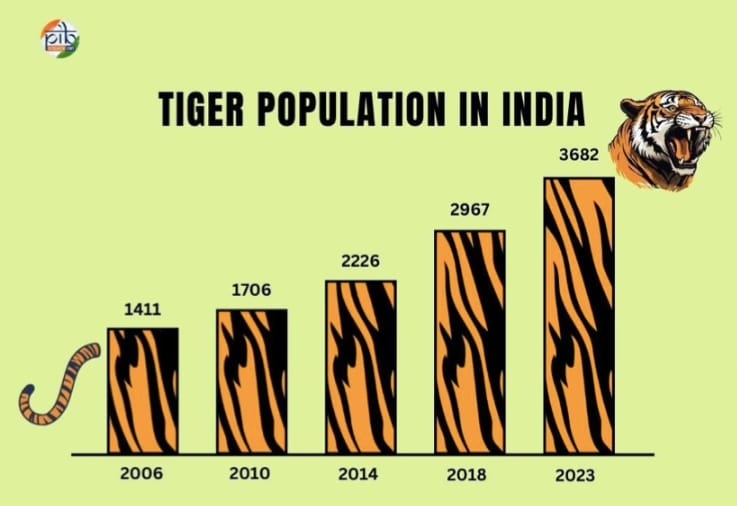
India holds over 75% of the world's estimated 5,574 adult wild tigers. According to the 2023 tiger estimation by the National Tiger Conservation Authority (NTCA), released by the Government of India on 29th July 2023, the current tiger population in India is estimated at 3,682 (ranging between a minimum of 3,167 to a maximum of 3,925 tigers). While such numbers show recovery and growth, the numbers are still far too low to be considered as a conservation success story. With each tiger being a victim of human-wildlife conflict, the numbers will continue to decline.
What can be done?
What we urgently need is comprehensive community education and awareness, particularly in rural areas of India that share borders and lands with tigers. The lack of education, generational myths, folklore, superstitions, and the general absence of awareness regarding species conservation are some of the key reasons why human-wildlife conflict persists in many regions of India. These communities, often living in close proximity to tiger habitats, are crucial to breaking the cycle of fear and misunderstanding that fuels conflict. For many rural residents, tigers are viewed through a lens of fear and folklore, where they are depicted as malevolent creatures that attack without reason and venture into human settlements to feast on human flesh. Such perceptions are often passed down through generations, fuelled by superstition and a lack of understanding of the tiger's true behaviour and its ecological role in the ecosystem. This creates the perfect breeding ground for misinformation that eventually leads to panic and hostility, especially when tigers venture into human settlements, resulting in violent retaliation. By implementing targeted educational programs that focus on dispelling myths and promoting a deeper understanding of tiger behaviour, we can begin to shift this mindset. Communities need to be informed about the importance of tigers in maintaining ecosystem balance, how these animals typically avoid human contact, and the factors that might lead to a tiger straying into human areas i.e. increasing human populations, encroachment on habitat and depletion of the natural resources that the tiger depends upon. Furthermore, fostering a sense of pride and stewardship for local wildlife can inspire communities to protect rather than harm these animals. As the national animal of India with a commanding name the Royal Bengal Tiger, communities should be taught to view tigers with a sense of pride and respect and not fear and hostility. When villagers understand the ecological, cultural, and economic value of tigers, such as through tiger eco-tourism or their role in maintaining forest health, they are more likely to see these majestic creatures as assets rather than threats.
1. Creating Awareness Programs: Educational programs must be specifically designed for rural communities living in proximity to tiger habitats. These programs should focus on educating villagers about the crucial role tigers play in maintaining ecosystem balance and the importance of conserving these majestic creatures. Much like initiatives implemented by local groups in Ladakh to protect snow leopards, and in Australia to safeguard the Indo-Pacific saltwater crocodile and great white sharks, community awareness and engagement are essential. Such initiatives, which have been successful in these regions, aim to educate the public about how to coexist with wildlife by adopting safe practices, like "Shark Safe" and "Croc Wise." For tigers, similar programs can promote "Tiger Safe" behaviour, teaching communities how to recognize tiger movements, prevent conflicts, and remain safe when living near tiger habitats. These programs should also educate people about the need to protect the forest ecosystems that sustain tigers, which directly impacts their livelihoods and well-being.
Community-based initiatives, such as working with local leaders and involving rural populations in wildlife monitoring and protection efforts, have shown success in reducing conflict in other parts of the world.
2. Utilising Technology for Monitoring and Prevention: Advancements in technology such as AI can greatly assist in mitigating human-wildlife conflict. The use of camera traps, drones, and satellite footage to monitor tiger movements around human settlements can offer real-time alerts to communities that share spaces with tigers. These technologies will allow villagers to take proactive measures by staying alert and avoiding areas where tigers might be present. Applications that alert citizens of a large predator nearby as well as regular monitoring will also help authorities identify potential problem animals that may require relocation or other interventions before they come into contact with humans. Funding should be provided to wildlife authorities and NGOs to impart the knowledge and tools to local populations.
3. Emergency Training and Legal Protection: Training communities on how to respond in emergencies, such as when a tiger is spotted near human settlements, is highly critical. Villagers should be educated on how to stay calm, alert local authorities, and evacuate safely in the presence of a tiger. In addition, retaliatory killings and attacks on tigers should be strongly prohibited by law. Offenders should face severe consequences, including hefty fines and long-term prison sentences, to deter future acts of violence. This legal framework is vital to protect tigers from senseless killings motivated by fear, hostility or misunderstanding.
4. Relocation of Problem Animals: In cases where a tiger poses a significant threat to human safety, relocation can be an option. However, it must be carried out with expertise, caution and proper planning. Relocating a tiger to a suitable habitat away from human settlements can help resolve conflicts without resorting to violence or killing. Such measures should always be consulted with wildlife experts to ensure the well-being of both the animals and the local populations. Such initiatives have produced significant success in countries like Australia where problem estuarine crocodiles have been safely relocated to sanctuaries or zoos to prevent unnecessary culling of the crocodiles and human-wildlife conflict.
5. Changing Perceptions: Respect, Not Fear: The portrayal of tigers in media and education needs to be urgently re-framed. It is important to acknowledge that tigers are powerful predators. The media`s role in depicting them as mindless killing machines or as "cute" animals that can be approached without caution has contributed to the misrepresentation of the tiger`s image. As a community, we must understand that tigers are highly adaptable and occasionally dangerous, which is crucial. Fear and hostility should be replaced with respect and reverence. Understanding their role in the ecosystem and recognising their value is essential for fostering peaceful coexistence. Tigers should not be feared or romanticized but respected for the vital role they play in maintaining the health of forests and ecosystems.
6. The Consequences of Inaction: Without such initiatives, the consequences are grim. If human-wildlife conflict continues, many more tigers will suffer, either being injured or killed due to the encroachment of humans on their natural habitats. If these conflicts persist, the future of tigers in the wild is uncertain.
By embracing education, technology, governance reforms, and community engagement, we can create a safer, more harmonious coexistence between tigers and the people who share their environment. These efforts must be scaled up across India, ensuring that everyone, regardless of literacy level, has the tools and knowledge to protect both themselves and the wildlife with which they share their land. The fate of tigers depends on the actions we take today or the day may come when we can only see these magnificent animals in the pages of a book or a magazine, lost to extinction because of avoidable conflicts with humans.
Sources